Chinese Incense: What It Is, How It’s Made, and How It Differs from Japanese Incense
Chinese incense is aromatic plant material — woods, resins, herbs and flowers — burned, warmed or worn for its scent. In its classical form it is blended: several materials composed into one formula, then pressed into sticks, coils, plaques or beads. It is not one single scent, and it is not the same tradition as Japanese incense.
Most English-language searches for “Chinese incense” are answered with a list of products. This page answers the other question: what the tradition actually is, what the words mean, and where the boundaries sit — including the boundary between Chinese incense and the Japanese practice it is so often confused with.
What does “Chinese incense” cover?
In Chinese, 香 (xiāng) is not limited to something you light. It covers raw aromatic material, the act of appreciating scent, and the objects made for that purpose. In English, “incense” usually means a combustible stick. That gap causes most of the confusion.
| Chinese term | What it refers to | English handle |
|---|---|---|
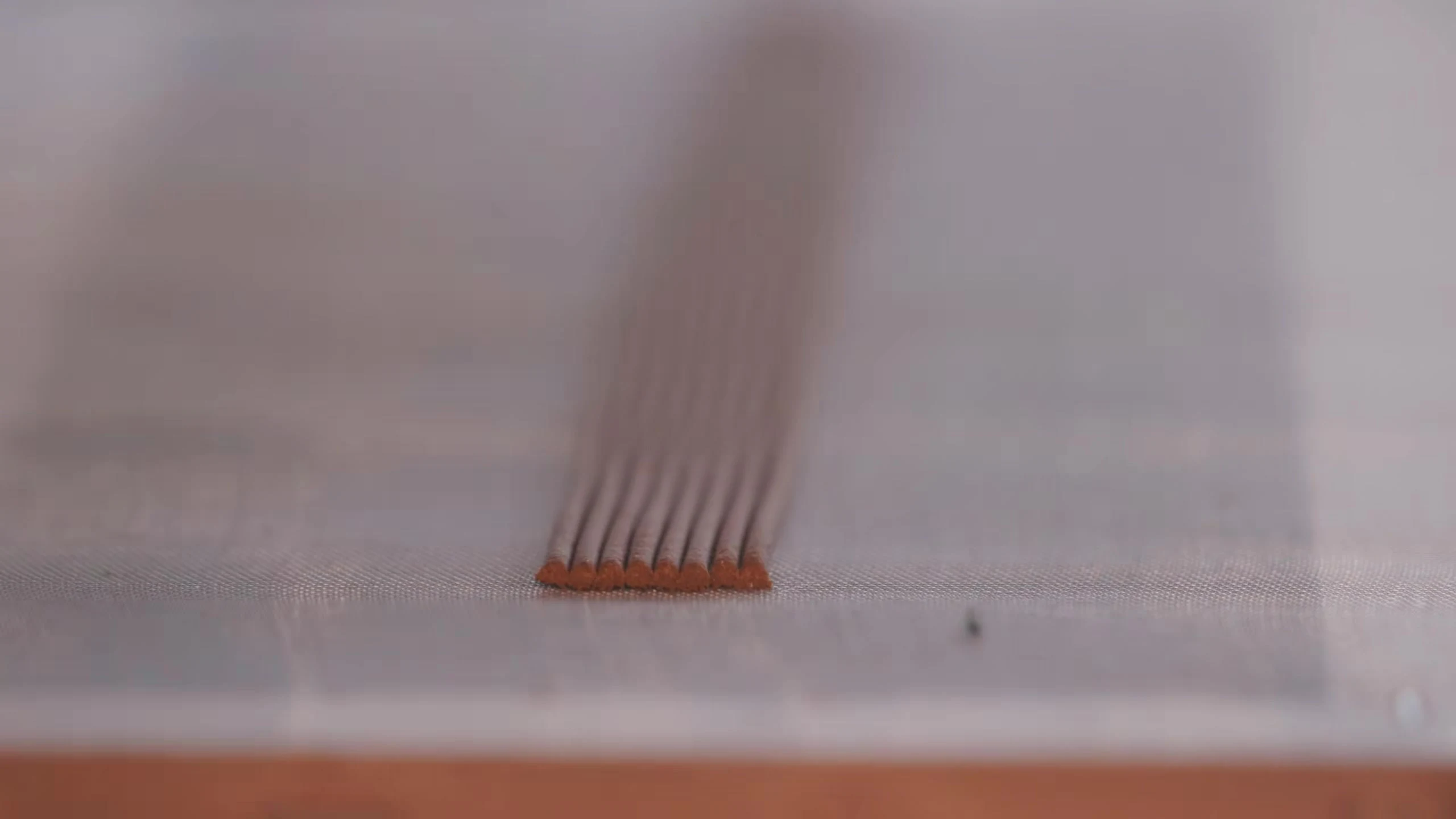
| 线香 xiàn xiāng | Extruded stick incense | Incense sticks |
| 盘香 pán xiāng | Coiled incense | Incense coils |
| 香粉 xiāng fěn | Loose aromatic powder | Incense powder |
| 香篆 xiāng zhuàn | Powder burned in a seal or stencil pattern | Incense seal |
| 树脂香 shù zhī xiāng | Resin incense (frankincense, myrrh, benzoin) | Resin incense |
| 合香珠 hé xiāng zhū | Blended incense pressed into beads and worn | Incense beads |
The last one is the form we make. It is the least known in English and the most often miscategorised — which is why it gets its own section below.
What does He Xiang (合香) mean?
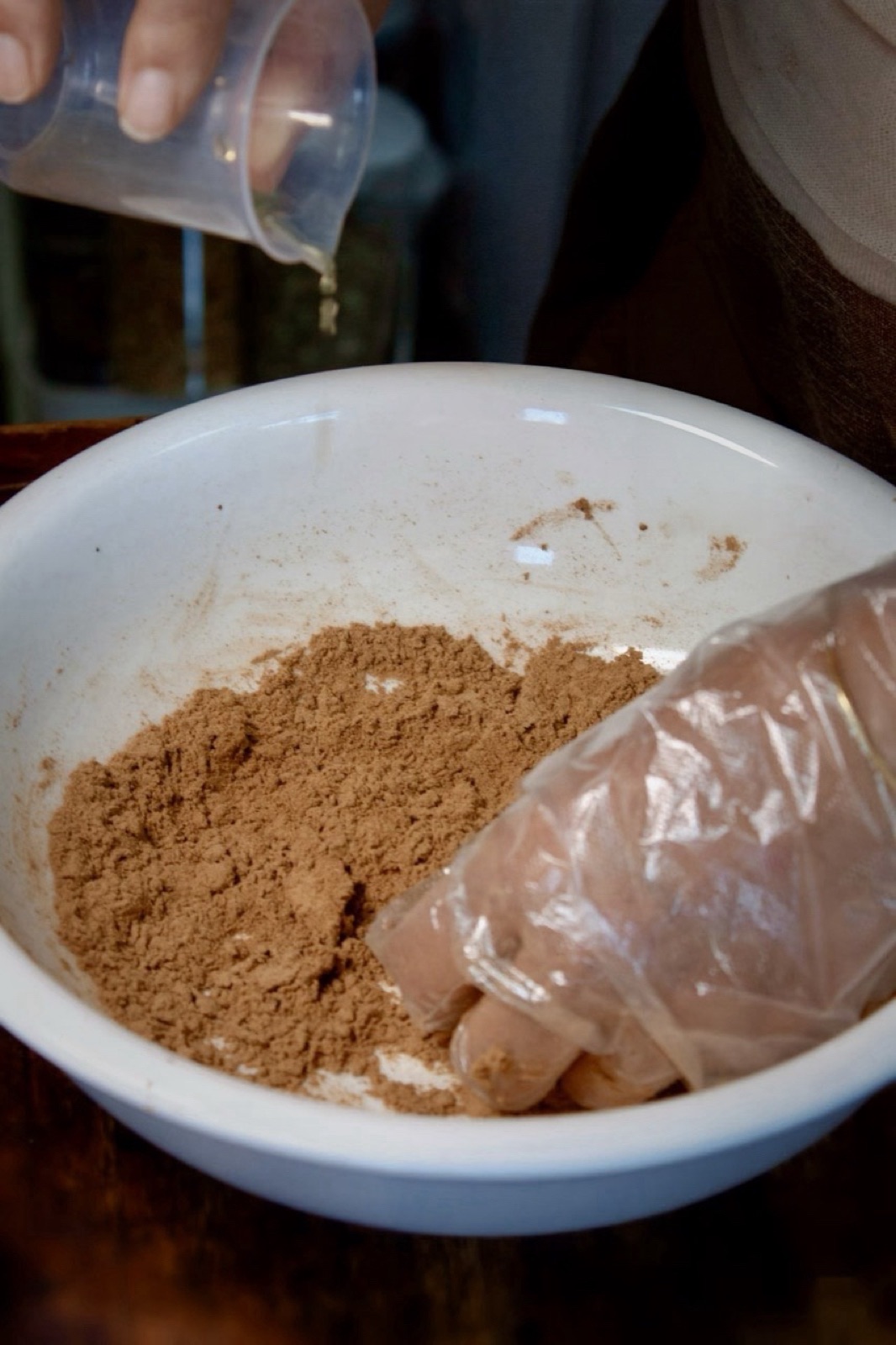
He Xiang (合香) literally means “combined incense”: two or more aromatic materials composed into a single formula, rather than one material burned alone. The character 合 is the same one used for blending, joining and harmonising. A defensible English rendering is harmonised blend or harmonious-blend incense.
The distinction matters because single-material incense is a different category. Pure sandalwood, burned on its own, is 单品香 (dān pǐn xiāng) — one material, one voice. He Xiang is composition: the point is not to smell one wood, but to build a scent that no single material could produce.
What are the four roles in a Chinese incense formula?
A classical He Xiang formula is structured by four roles, borrowed from the language of classical Chinese medicine but used here as composition logic, not as therapy: 君臣佐使 — chief, deputy, assistant, guide.
| Role | Chinese | Function in the blend |
|---|---|---|
| Chief | 君 jūn | The material that defines the scent. If you can name the blend in one word, this is it. |
| Deputy | 臣 chén | Supports the chief, extends its middle and gives it body. |
| Assistant | 佐 zuǒ | Adjusts — softens a sharp edge, adds a facet, keeps the blend from being monotonous. |
| Guide | 使 shǐ | Carries the blend: opens the top note, fixes the base, and determines how the scent moves over time. |
A blend is judged on structure, not on the price of its rarest ingredient. That is a genuinely different way of thinking about scent from the single-note approach most Western fragrance writing assumes.
How are incense beads different from mala beads?
Incense beads (合香珠 · He Xiang Zhu) are blended incense pressed into bead form, drilled, and worn against the skin or hung as an object. They are a scent carrier first. They are not prayer beads: there is no counting function, no prescribed number, and no religious use.
Three things get mixed up in English search results, and each has its own page:
- Incense beads vs mala beads — malas are counting tools with a fixed structure (commonly 108 beads); incense beads have no count and no liturgy. → Read the comparison
- Incense beads vs aroma beads — “aroma beads” in English almost always means fragranced plastic beads sold for laundry and car use, a completely different product made from a different material. → Read the comparison
- Incense beads vs wooden bead bracelets — a wooden bead is a piece of wood; an incense bead is a compressed aromatic formula, layered and dried.
How is Chinese incense made?
The process has more steps than most people expect, and one of them cannot be shortened.
- Prepare — raw materials are sorted, cleaned and trimmed. Woods are split; flowers are de-stemmed; resins are cleaned of bark.
- Grind and sieve — each material is ground separately to a powder and sieved to a consistent mesh. Grinding everything together would blur the individual materials before the formula is even built.
- Blend by formula — powders are weighed and combined in the ratio the formula specifies. This is where 君臣佐使 is applied.
- Rest and mature — the blended powder is set aside. This step has no shortcut: the materials need time to settle against each other.
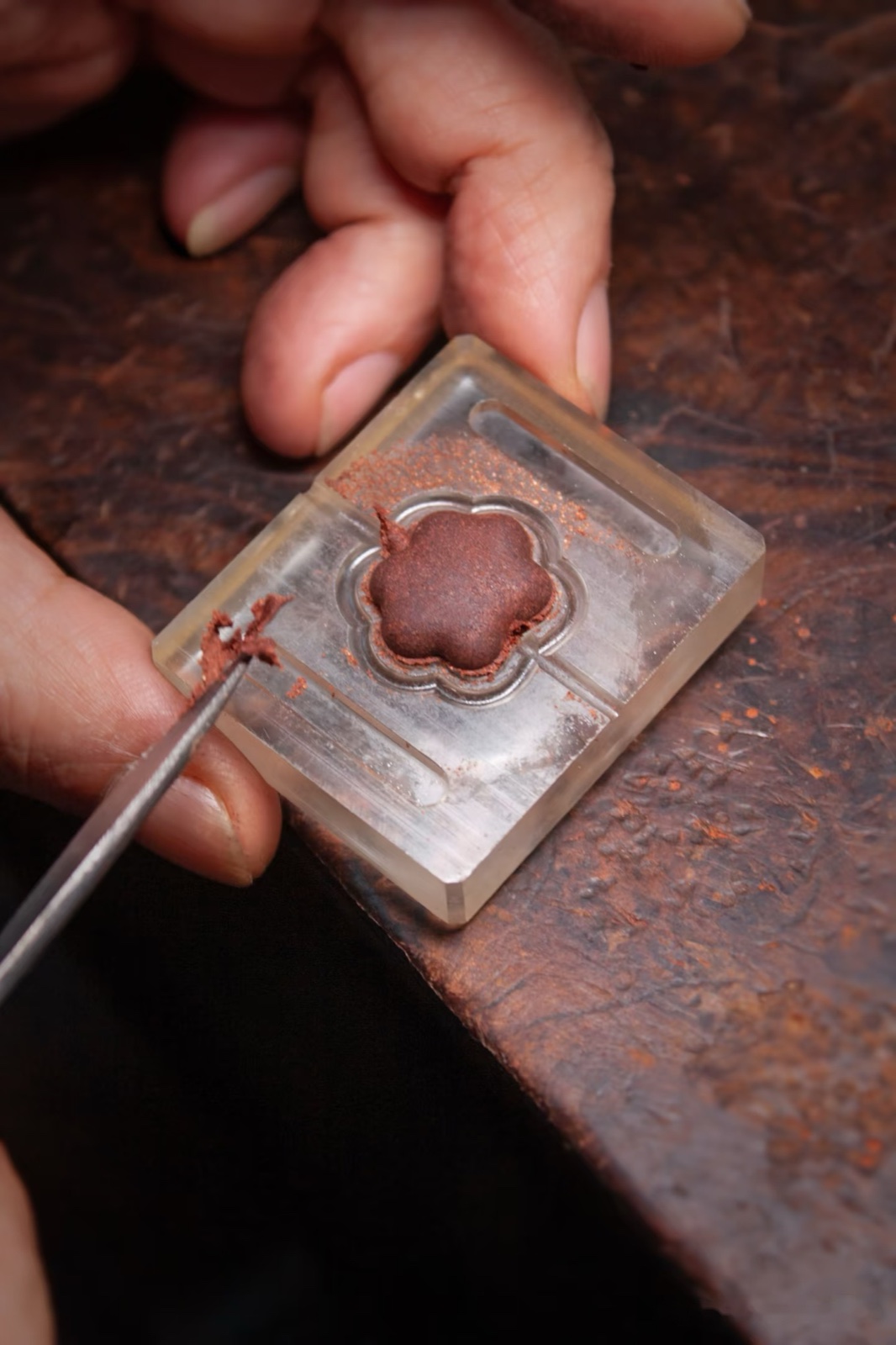
- Layer and shape — the powder is bound with a natural plant-based binder, kneaded into a paste, then shaped — extruded for sticks, pressed for beads and plaques. For layered beads, the paste is built up in successive layers before shaping, which is what produces the marbled pattern.
- Dry and finish — shaped pieces dry in shade, then are cleaned and finished by hand.
There are no synthetic adhesives and no fragrance oils added after the fact. The scent is the material.
How is Chinese incense burned?
| Form | How it is used |
|---|---|
| Sticks | Set in a holder or an ash bed and lit at the tip; the ember travels down the stick. |
| Coils | Lit at the outer end; burns for hours, traditionally hung or set on a stand. |
| Powder / seal | Powder is pressed into a seal or stencil shape in a bed of ash, then lit at one end. |
| Resin | Warmed over indirect heat — charcoal with a mica plate, or an electric warmer — rather than burned directly. |
| Beads | Not burned. Worn, held, or kept in a drawer or display dish. |
If you are new to the forms, the practical guides are here: how to burn incense sticks, how to put out a stick safely, and how to burn incense powder.
How does Chinese incense differ from Japanese incense?
They are two different traditions with two different questions at their centre, and neither is a lesser version of the other.
| Chinese incense | Japanese incense (kōdō) | |
|---|---|---|
| Central question | How do materials combine into a formula? | Can you identify and distinguish a single material? |
| Unit of attention | The blend | The material |
| Historic setting | Scholar’s desk, household ritual, tribute, medicine, festival | Court and temple ceremony, later formalised as a listening practice |
| Characteristic activity | Composing, aging, gifting a formula | Listening (聞香), and the game of distinguishing scents |
| Typical form today | Sticks, coils, powder, beads, plaques | Sticks, and small heated chips in a listening ceremony |
Japanese incense culture developed its own refined vocabulary and a formal practice of listening to incense; it also carries a strong tradition of blended incense (薫物, takimono) from the Heian court. Chinese incense culture stayed closer to daily life and to formulation as craft. Comparing them as “which is better” is the wrong question. Comparing them as “which question does each answer” is the useful one.
For a buyer-facing version of this comparison — procurement, MOQ and shelf description rather than culture — see Chinese vs Japanese incense: what buyers should know on our wholesale site.
What Chinese incense does not do
This matters more than any marketing claim, so it is stated plainly:
- We describe scent, material and craft. We do not claim that incense treats, cures or prevents any condition, and we do not describe it as medicine.
- We do not claim that a scent improves sleep, reduces stress, or purifies air. Those are health claims, and in the EU and US they carry regulatory obligations a scent product does not meet.
- “Aromatherapy” is a regulated category in several markets. We do not use the word for our products.
- If another seller makes those claims, ask what the basis is. A pleasant scent is a real thing; a therapeutic effect is a different claim and needs different evidence.
Burning anything produces smoke. Use in a ventilated room, never leave a burning stick unattended, and keep away from children, pets and anything flammable. If you have a respiratory condition, treat smoke of any kind with caution.
Where does Chinese incense come from?
A compressed timeline, because the long version belongs on its own page:
- Shang and Zhou — aromatic plants and woods burned in ritual contexts; the earliest material evidence of systematic use.
- Han — overland trade brings resins from Central and West Asia; blending becomes possible on a wider material base.
- Tang — incense enters court life, trade and gift exchange; formulas travel with people.
- Song — the high point for scholars’ incense: formulas are written down, compared, criticised and refined as a literati pursuit.
- Ming and Qing — the craft is codified in texts and diffused into household and festival practice.
- Today — sticks and coils dominate volume; the older blended and wearable forms survive in smaller workshops.
Why we named the brand QINGYUN
清 (qīng) means clarity — a clear heart, clear water, a clear morning. 昀 (yún) means daylight, and in our reading, the soft light of early morning that you notice only when you are still enough. A phrase we return to: a clear heart sees the morning light.
It is not a promise of transformation. It is a preference — that in a life moving fast, you keep the ability to notice light, scent and season. The museum exists because a culture deserves to be understood, not only used.
Frequently asked questions
Is Chinese incense the same as incense sticks? No. Incense sticks are one form. Chinese incense also includes coils, loose powder burned in seal patterns, resin warmed over heat, and blended incense pressed into beads and plaques.
What is 合香珠 (He Xiang Zhu) in English? Blended incense beads. The most usable English name is incense beads; harmonious-blend beads is a descriptive rendering of He Xiang. They are worn, not burned.
Does Chinese incense contain agarwood? Sometimes — agarwood (沉香, Aquilaria) is one of the classic materials. All Aquilaria and Gyrinops species are listed in CITES Appendix II, but what the listing controls is the form the material takes: raw chips, beads and carvings carry documentation requirements, while some processed forms fall outside the listing. Many blends use sandalwood (Santalum album, not CITES-listed) instead. Ask any supplier which species, from where, and in what form it ships.
Do incense beads keep their scent forever? No. A plant-based bead carries scent for years rather than indefinitely, and it fades faster when exposed to heat, sunlight and humidity. Keep them dry, out of direct sun, and stored sealed when not worn.
Can I burn incense beads? No. They are a worn and handled form, made to sit against the skin or hang as an object. Burning them would ruin the finish and produce smoke the form was never designed for.
Explore further
- Incense beads vs aroma beads: two very different things
- Incense beads vs mala beads
- How to burn incense sticks, step by step
- Agarwood: what it is and why CITES matters
- Sandalwood in Chinese and Indian incense traditions
See incense beads in wearable form — browse the collection on our wholesale site, where each piece lists its formula, dimensions and trade terms. → Scented Jewelry collection