Incense Beads vs Mala Beads: What’s the Difference?
“Incense bead” and “mala” describe different aspects of an object. Incense bead refers to the material and craft: aromatic plant materials blended by formula and pressed into beads. Mala refers to a structured strand, commonly associated with counting recitations in Hindu and Buddhist practice. A product can therefore be made from incense beads and also use a 108-bead mala-style structure.
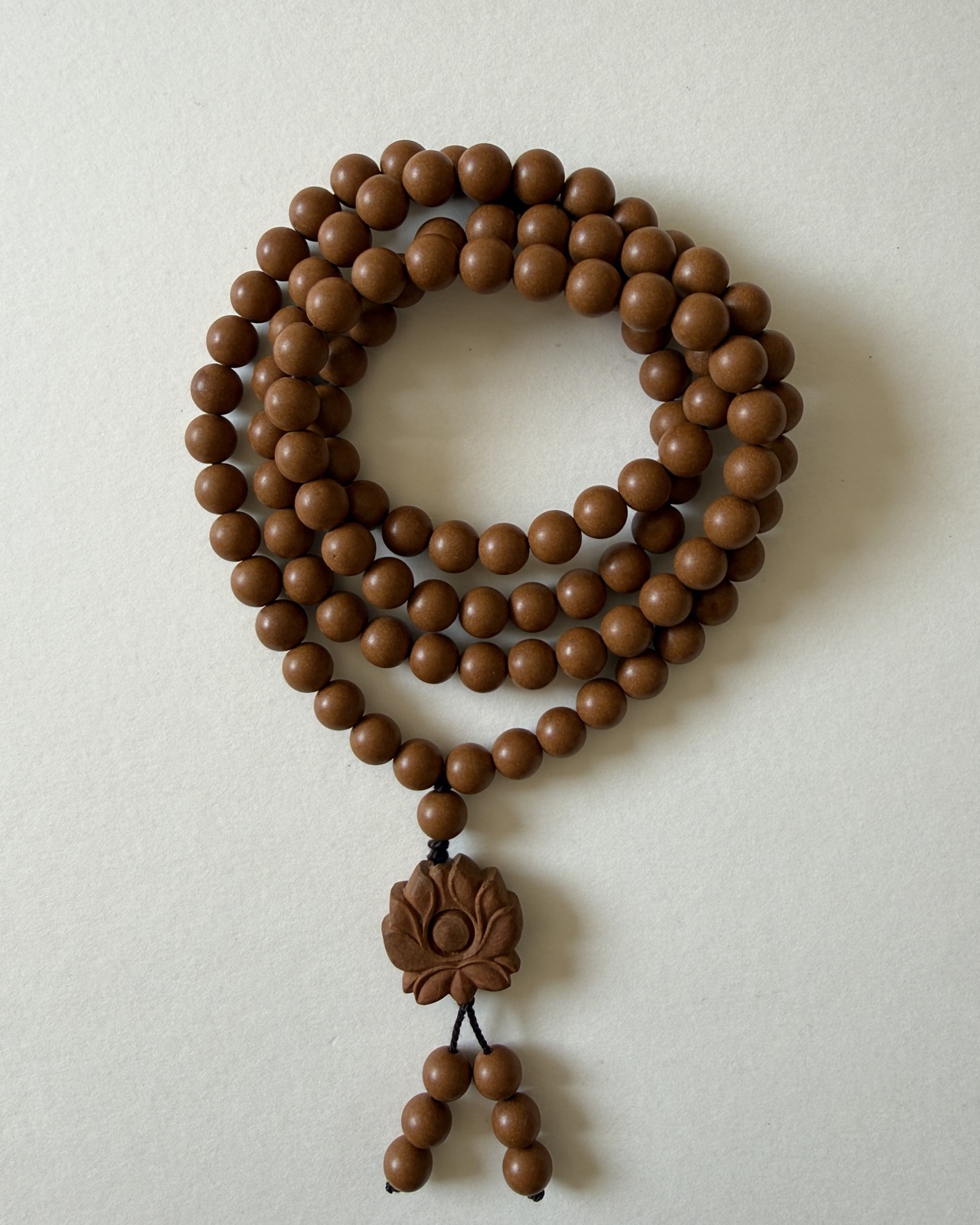
QINGYUN’s QY-AJ-122 Lotus Incense Pendant Necklace is one such example: a 108-bead strand made with blended-incense beads. Its material identity and its bead arrangement overlap; neither term cancels the other. What should not be assumed from appearance or bead count alone is whether a particular product has been made, consecrated or used as a devotional object within a specific tradition.
What is a mala?
A mala is a string of beads used to count repetitions of a mantra or prayer. The structure is the point:
- 108 beads is the standard count in most Hindu and Buddhist malas, with divisions of 108 into 54 or 27 for shorter strings
- A guru bead (or meru bead) marks the starting point; the tassel hangs from it
- The count is fixed, because the count is what the object is for — you move one bead per repetition
- Materials carry meaning: rudraksha, tulsi, sandalwood, bodhi seed, crystal, bone — each with its own tradition and its own rules of use
A mala used in religious practice is handled and counted with the thumb, and may be worn between practice sessions. The same long-strand format is also used in contemporary jewellery, so structure alone does not establish the devotional status of every product sold as “mala beads.”
What are incense beads?
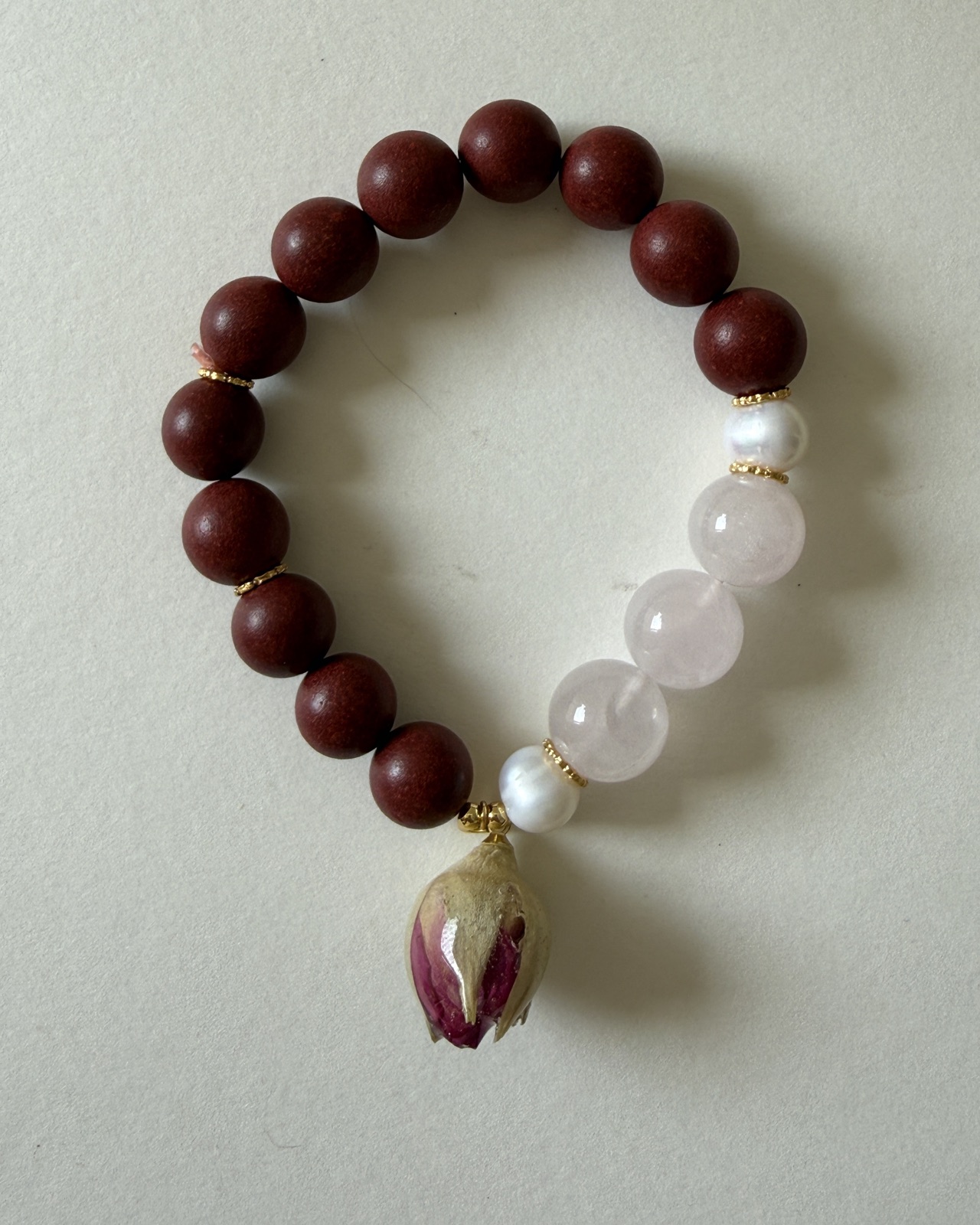
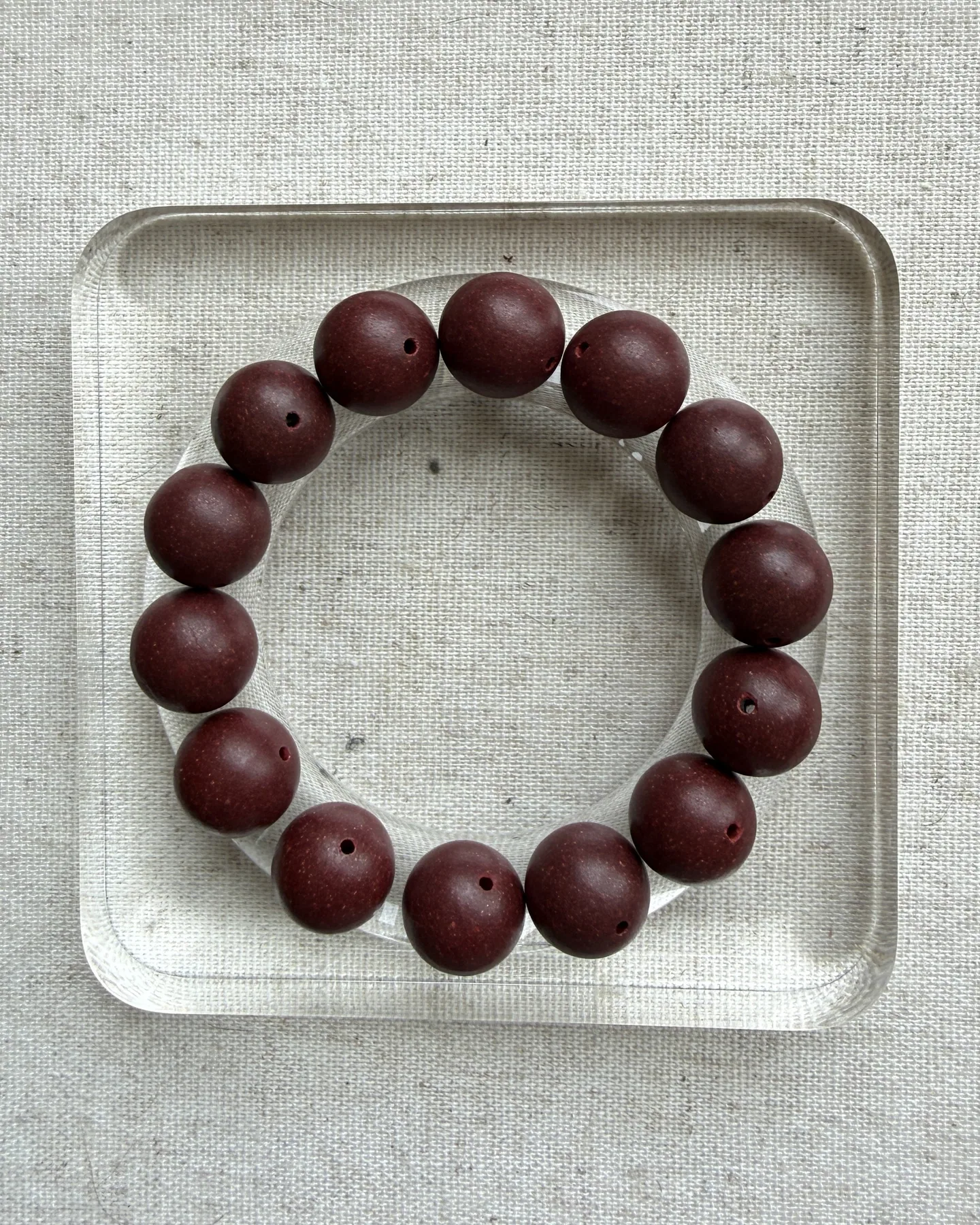
Incense beads (合香珠 · He Xiang Zhu) are blended Chinese incense pressed into bead form. Aromatic woods, resins, herbs and flowers are ground separately, combined by formula, bound with a natural plant-based binder, layered into a paste, shaped, drilled and finished by hand. The bead is worn — on the wrist, as a pendant, or hung as a charm — and the scent comes from the material.
The defining feature is the formula: which material is chief, which supports it, which adjusts it and which carries it. Incense beads can appear as a single bead, a bracelet, a pendant or a long 108-bead strand. Their count and stringing design vary by product; the material category does not prescribe one fixed structure.
Are incense beads prayer beads?
Not automatically. An incense bead is defined by what it is made from, not by whether it is used for prayer. Most incense-bead jewellery is designed primarily to carry scent, but incense beads can also be assembled into a matched 108-bead strand that can physically support counting.
Whether a particular strand should be described as prayer beads depends on its intended use, maker’s description and cultural or religious context. A 108-bead count by itself does not prove consecration, ritual status or affiliation with a specific tradition.
How do the two differ?
| Mala beads | Incense beads | |
|---|---|---|
| Primary function | Commonly counting recitations; also used as jewellery | Carrying scent; may also be arranged as a counting strand |
| Structure | Commonly 108 beads, with variations such as 54 or 27 | Variable: single bead, bracelet, pendant or 108-bead mala-style strand |
| Governing logic | Number, structure and intended use | Formula (君臣佐使 — chief, deputy, assistant, guide); stringing design varies |
| Material | Rudraksha, tulsi, sandalwood, bodhi seed, crystal, bone, gemstone | Blended aromatic plant powders + natural binder |
| Cultural origin | Hindu and Buddhist practice, South and East Asia | Chinese incense culture (合香) |
| How it is used | Counted with the thumb during recitation, or worn | Worn, held or kept near; a matched long strand can also be counted |
| Religious status | Depends on intended use and context | Not determined by material alone |
| Scent | Incidental — depends on material (sandalwood malas do smell) | The purpose |
| Uniformity | Beads are matched; a mala should feel consistent in the hand | Beads vary by batch and by layer |
| Aging | Patina develops with handling | Colour darkens with wear; scent fades over years |
Why do people actually confuse them?
Two honest reasons, and one of them is not trivial:
- Sandalwood is used for both. A sandalwood mala smells like incense because it is the same material incense is made from. If your only test is “it smells of sandalwood and it is on a string”, the objects look identical.
- Both are worn on the wrist and both are photographed flat. Product photography flattens the difference — you cannot see the count, the guru bead, or the drilling in a top-down square crop.
The distinction becomes clearer when you ask two separate questions: what are the beads made from? and how is the strand structured and used? QY-AJ-122, for example, answers both: its beads belong to the blended-incense craft tradition, while its 108-bead long-strand arrangement follows a mala-style format.
Can I wear a mala if I am not Hindu or Buddhist?
That is a question for the practitioner communities whose object it is, not for a seller — and answers within those communities differ. Two things can be said without overstepping:
- Many malas are sold as jewellery today, with no expectation of practice attached.
- A mala used in practice is a devotional object. Treating one as a fashion accessory is a choice with a cultural cost, and it is worth making deliberately rather than by accident.
If what you want is a scented object without a devotional claim, choose an incense-bead design described that way. If you want a mala for religious practice, choose a maker who can explain the strand’s count, structure, intended use and relationship to the relevant tradition.
Can I use incense beads for counting?
Yes, if the product is designed for it. Counting works best with a fixed number and a consistent sequence of beads. A single incense bead or short decorative bracelet is not built for that purpose, but a matched 108-bead incense strand can physically be used for counting. Whether it is appropriate for a particular devotional practice depends on that tradition and on how the strand was intended and presented.
Which should you buy?
| What you want | Choose |
|---|---|
| A practice tool with a fixed count | A mala made and described for that practice |
| A scented object to wear without a devotional claim | An incense-bead bracelet or pendant |
| A scented 108-bead long strand | A mala-style incense-bead design such as QY-AJ-122 |
| Sandalwood scent on the wrist | Either — check both the material and the intended use |
| A gift with a craft story from Chinese incense culture | Incense beads |
| Something to hold during meditation, without counting | Either; choose by feel, material and context |
Frequently asked questions
Are incense beads prayer beads? Not by definition. “Incense bead” identifies the material and craft. Whether a strand is used as prayer beads depends on its structure, intended use and cultural or religious context.
Do incense beads have 108 beads? They can. There is no single prescribed count for the material category, but QINGYUN’s QY-AJ-122 Lotus Incense Pendant Necklace is a real 108-bead mala-style design made with blended-incense beads.
Can a mala be worn as jewellery? Many are sold that way. Whether it should be is a question of cultural respect rather than of product design, and the answer depends on who you ask.
Why do sandalwood malas smell like incense? Because sandalwood (Santalum album) is one of the classic incense materials. The scent is the wood itself, not an added fragrance.
Can incense beads be re-scented or re-strung? Re-stringing, yes — each bead has a single central drilling. Re-scenting, no: there is no reservoir, and the scent is the material.
Explore further
- Chinese incense: what it is and how it’s made
- Incense beads vs aroma beads: two very different things
- Sandalwood in Chinese and Indian incense traditions
See the material up close — the Scented Jewelry collection lists each formula, bead dimension and finish. → Scented Jewelry collection