Magnolia Symbolism in Chinese Culture: Purity Before the Leaf
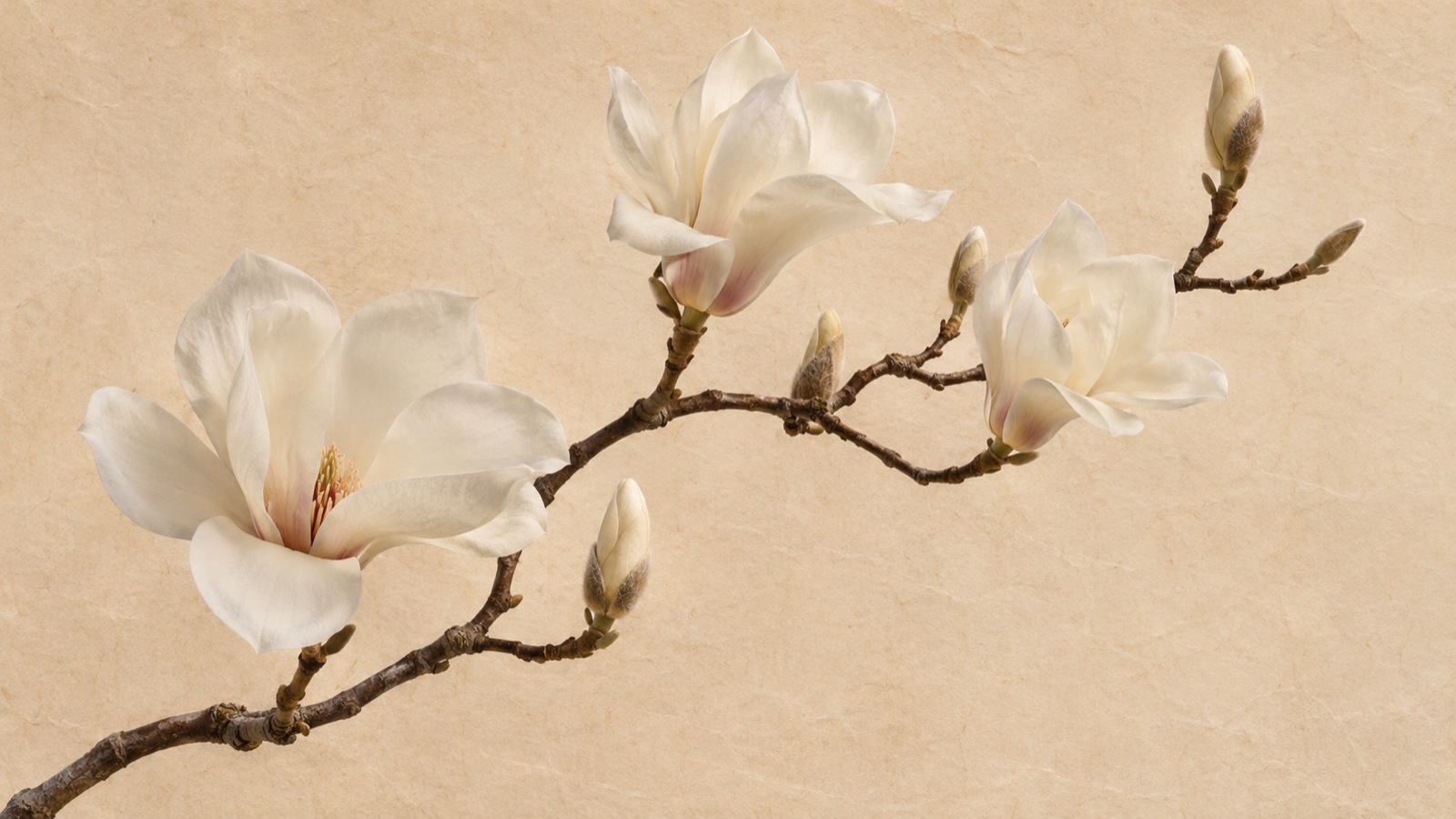
In Chinese culture the magnolia (玉兰, yùlán) symbolises purity, nobility and the arrival of spring — because it blooms on bare branches, before any leaf appears. The flower arrives with nothing to support it: no foliage, no scent to speak of, no fruit. That bareness is the whole meaning.
It is one of the few floral symbols in Chinese art whose meaning is legible from its botany. You do not need a dictionary to read it; you need to have seen a magnolia in March.
What does the magnolia symbolise?
| Meaning | Why |
|---|---|
| Purity | White petals, no leaf, no distraction |
| Nobility / integrity | It flowers without support — a classical metaphor for character that does not depend on circumstance |
| Spring and renewal | One of the earliest blossoms in central and northern China |
| Friendship and gratitude | In later usage, magnolia given as a gesture of respect |
The flower’s Chinese name, 玉兰, literally reads “jade orchid” — an explicit pairing of the flower with jade, the material that carries the same associations of purity and value.
Why does the magnolia flower before its leaves?
Botanically, magnolias are among the earliest flowering plants, and many species flower before leafing out — a strategy that makes the blossom more visible to early pollinators. Culturally, the effect is what matters: the tree appears to produce beauty from nothing.
That is why the magnolia appears so often in literati painting, where the subject is usually character rather than horticulture. A branch of magnolia painted in ink is a statement about the person who painted it, not about the garden.
Where does the magnolia appear in Chinese design?
- Painting — ink wash branches, often paired with birds or rocks
- Porcelain — carved or painted on Song and Ming wares, frequently with peony or chrysanthemum
- Architecture — planted in temple courtyards and scholar’s gardens; the pairing of magnolia and crabapple (玉棠) forms a visual pun
- Textiles — brocade and embroidery, usually in combination rather than alone
- Garden — 玉兰, 海棠, 牡丹 and 桂花 planted together, read as 玉堂富贵 (“jade hall, wealth and honour”) — a rebus built from the first characters
That last point is worth stating carefully: the combined planting carries the auspicious reading. The magnolia alone carries purity. Meaning in Chinese design is usually compositional, not individual.
How is the magnolia used in jewellery and motif work?
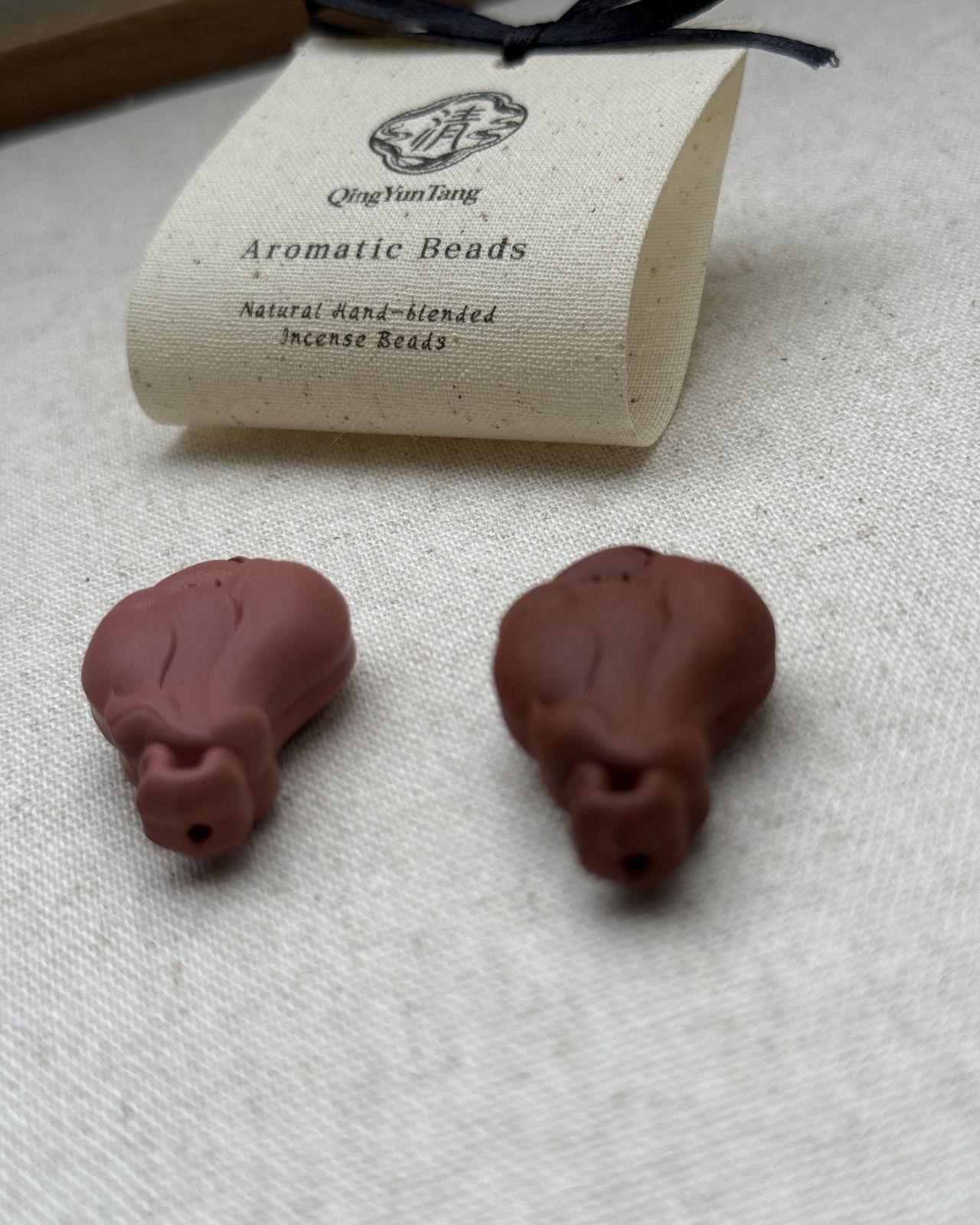
At small scale, the flower does not survive as a flower. Three reductions are common:
- Petal form — three to five overlapping teardrops; reads as blossom without detail
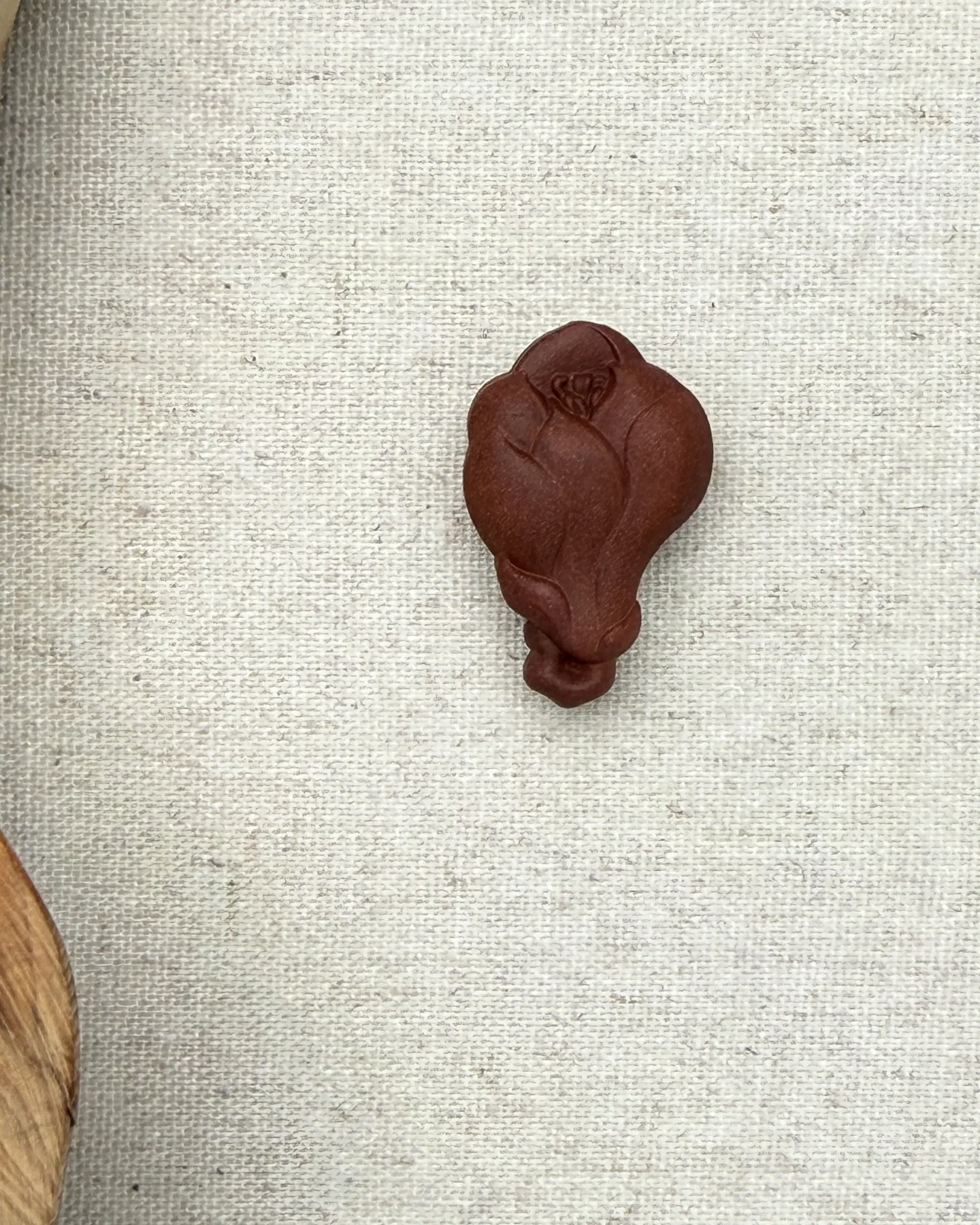
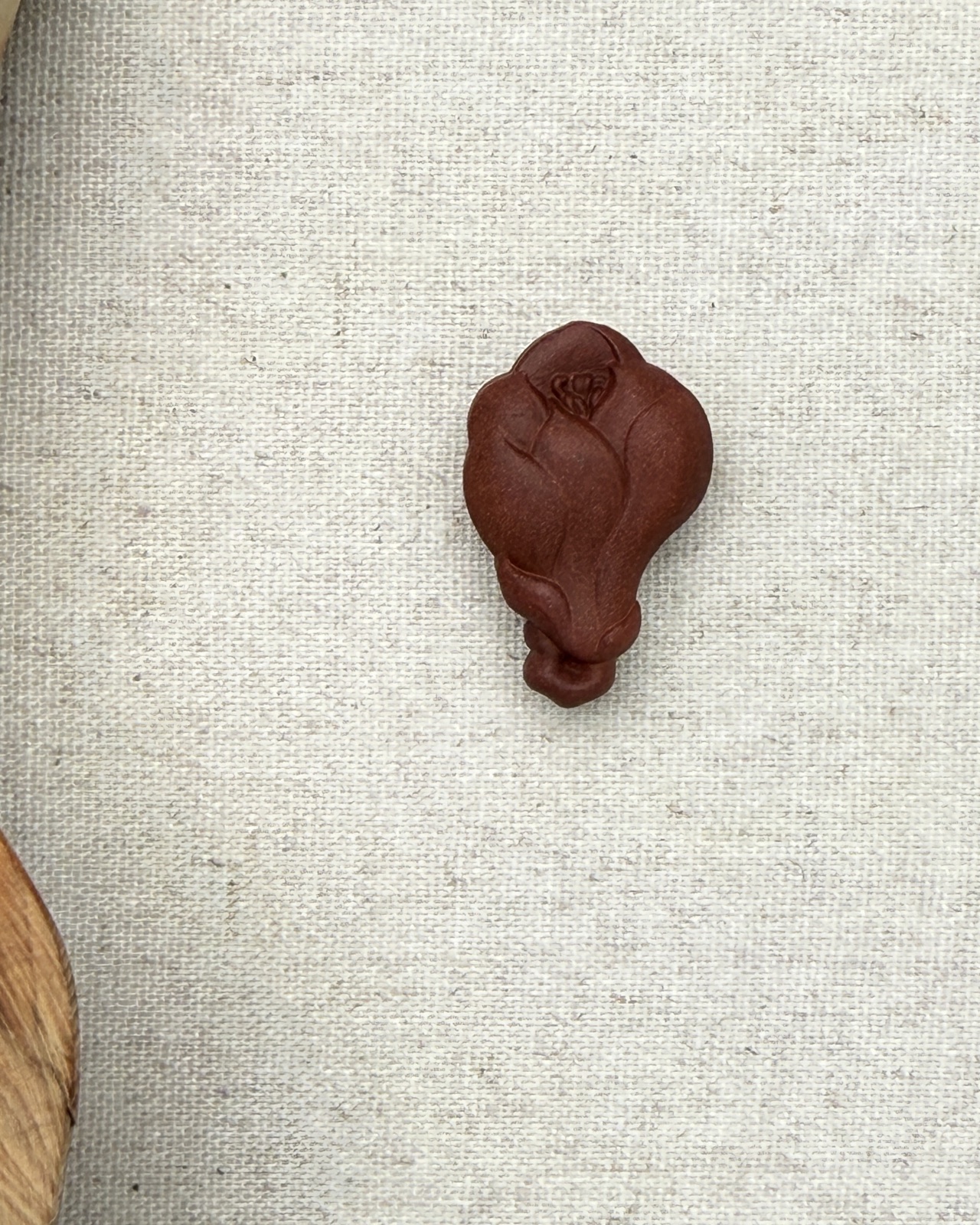
- Bud form — a closed, pointed shape, easier to render in relief than an open bloom
- Branch form — a curved stem with two or three blossoms, used where there is room
On a bead or a pendant, the relief has to survive being held. That constrains how much of the flower can be described: the motif becomes a silhouette, and the meaning has to be carried by the object’s context rather than by detail.
Magnolia vs magnolia: 玉兰 and 辛夷
Two different plants share the English name:
- 玉兰 (yùlán) — Magnolia denudata, the white ornamental, the one in the paintings
- 辛夷 (xīnyí) — Magnolia liliiflora or M. biondii, purple-red, and used as a medicinal material
They are distinct in Chinese usage: 玉兰 is the ornamental and the motif; 辛夷 is the herb. English collapses both into “magnolia”, which is why descriptions of “magnolia symbolism” sometimes drift into medicinal claims that belong to 辛夷 and not to the flower at all.
What the magnolia does not mean
- It is not a wealth symbol on its own. The wealth reading comes from the four-plant combination (玉堂富贵), not from the magnolia by itself.
- It is not a promise of anything. It is a cultural motif with a long pictorial history. We describe the motif; we do not claim that wearing it changes your circumstances.
- It is not a Japanese symbol. Magnolias grow across East Asia and appear in Japanese art too, but the specific 玉兰 reading is Chinese.
Frequently asked questions
What does the magnolia symbolize in China? Purity, nobility and the arrival of spring — because it flowers on bare branches before the leaves appear.
What does 玉兰 mean literally? “Jade orchid.” The name pairs the flower with jade, which carries the same associations of purity and value.
Is magnolia a Chinese symbol of wealth? Not on its own. The wealth reading comes from planting magnolia with crabapple, peony and osmanthus — a rebus, not a single flower.
Why do magnolias bloom before their leaves? It is an early-flowering strategy that makes the blossom more visible to early pollinators. Many magnolia species do it.
Explore further
Motif collection — pieces grouped by motif, each with its design note and dimensions. → Motif collection