
This page is a working sample of how QINGYUN connects culture and product. It is not a finished research article: where a fact is confirmed it is labelled, and where it is still being verified it says so plainly.
01 — The cultural source
“Yá xiāng” (衙香, official incense) is a category of incense recorded in Song-dynasty incense manuals[1] — a class associated with officials and the scholar-gentry, typically compounded from woods, resins and aromatic botanicals toward a quiet, refined character.
“Lady Rui” (花蕊夫人, the Lady of the Flower Stamens) is a figure of the later Shu court, whose epithet appears in Song literati notes[2]. The formula name “Lady Rui's Court Incense” links the two. Its exact recipe and the precise manual in which it is transcribed remain pending verification — this article is a narrative frame, not a finished transcription.
02 — The craft
Traditional Chinese incense-making follows a general sequence: the raw botanicals are prepared (cleaned, fire-processed or steeped), ground to powder, compounded by formula with a binder, shaped into beads or pills, and then cured slowly so the aroma matures.
This describes the general tradition, not QINGYUN's specific production parameters. The studio treats the classical formula as a living reference and works its own modern revival from it.
03 — The product
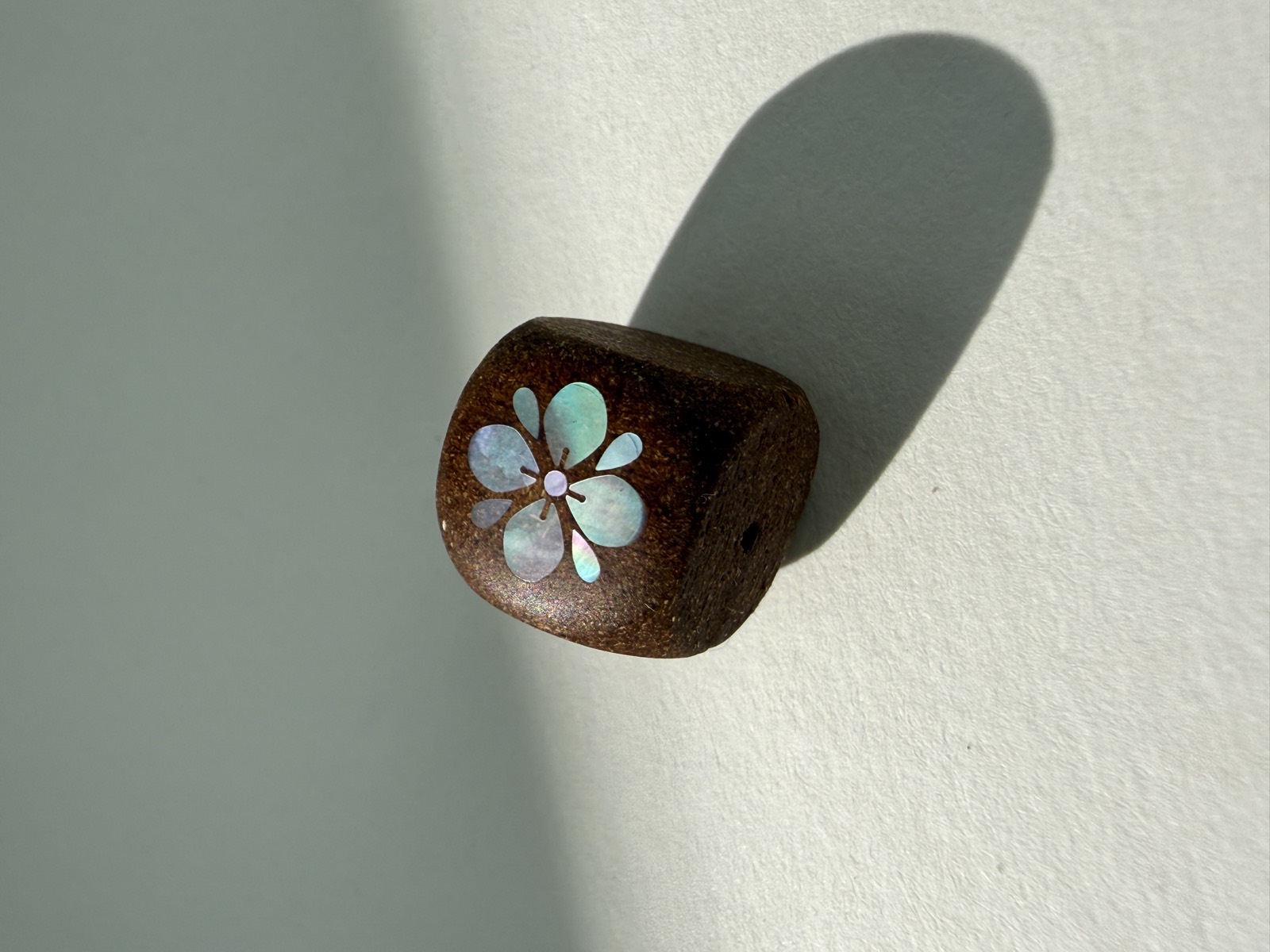
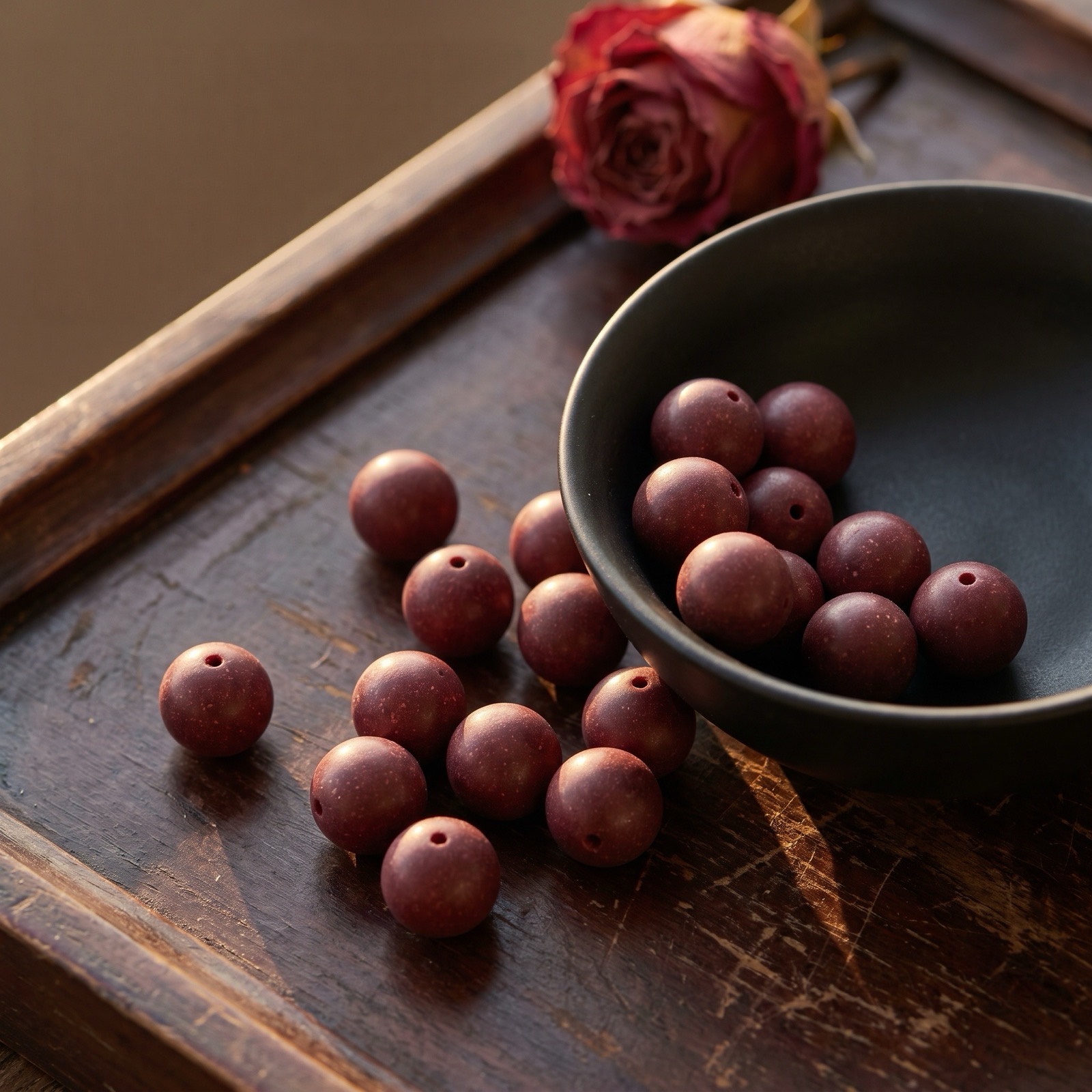
QINGYUN takes the formula name as its starting point and compounds it into blended-incense beads — loose or strung — for wear and scent. The bead is a modern revival, photographed as a real product of the current range; it is not presented as a surviving historical object.
View Lady Rui's Court Incense in the B2B showroom →
04 — Present-day use
Worn as a bracelet, a pendant or the core of a sachet, the beads release scent slowly with body warmth. Incense moves from a fixed ritual into something portable and personal — for commute, quiet reading, or a desk kept calm.
This is the point of the archive's work: to make a classical practice legible for contemporary life, without blurring the line between a historical record and a product made today.
Sources & credits
- [1]Song-dynasty incense manuals — e.g. Chén-shì Xiāngpǔ (陈氏香谱) and later compendia — are the general source for the “yá xiāng” category. Source · 史料
- [2]Lady Rui (花蕊夫人) appears in Song literati notes; the exact incense attribution is pending verification. Pending · 待核验
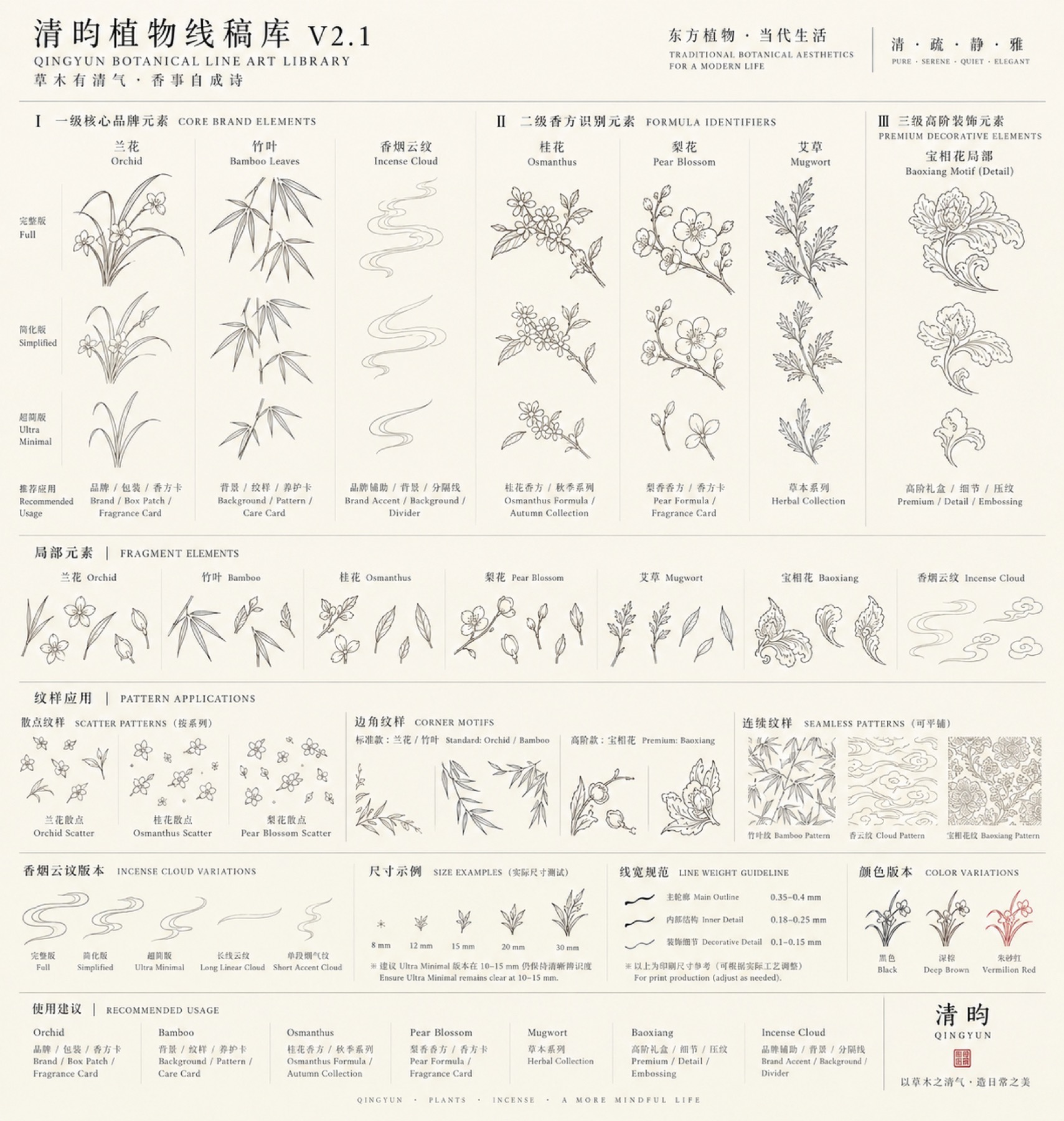
- ImgProduct photography — QINGYUN Product Asset Library (real SKU, RRC). Botanical line-art — QINGYUN brand line-art library. Verified
- NoteDesign prototype. The cultural narrative is a framework sample — full transcription and source verification are required before publication. The modern product is not a historical original. Modern · 复原